
Why does the Aspen Quake? Populus Tremuloides, is a tree that is covers a wide region of America, and has also been found to grow at certain parts of higher altitudes in Mexico! It’s a rather tall and also rapidly growing tree. Our Arborists appreciate the quaking aspen for its leaves as they are flat at the base allowing for the trees to “shimmer” in the wind.
1. Leaves
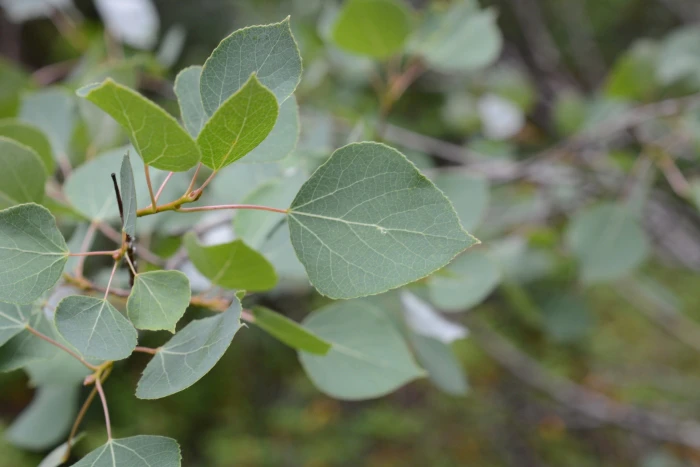
The quaking aspen has a beautiful spade shape. Like an ace of spades.

The stem of the quaking aspen’s leaves are actually called Petioles. Due to the flattened petioles this works almost like a pinwheel in the wind.
Check out this video to see the leaves “shimmering” in the wind!
The quaking aspen’s leaves turn a golden yellow color in the fall that really shows off how beautiful Autumn is in Petoskey, especially while driving through the tunnel of trees in Harbor Springs!
2. Bark
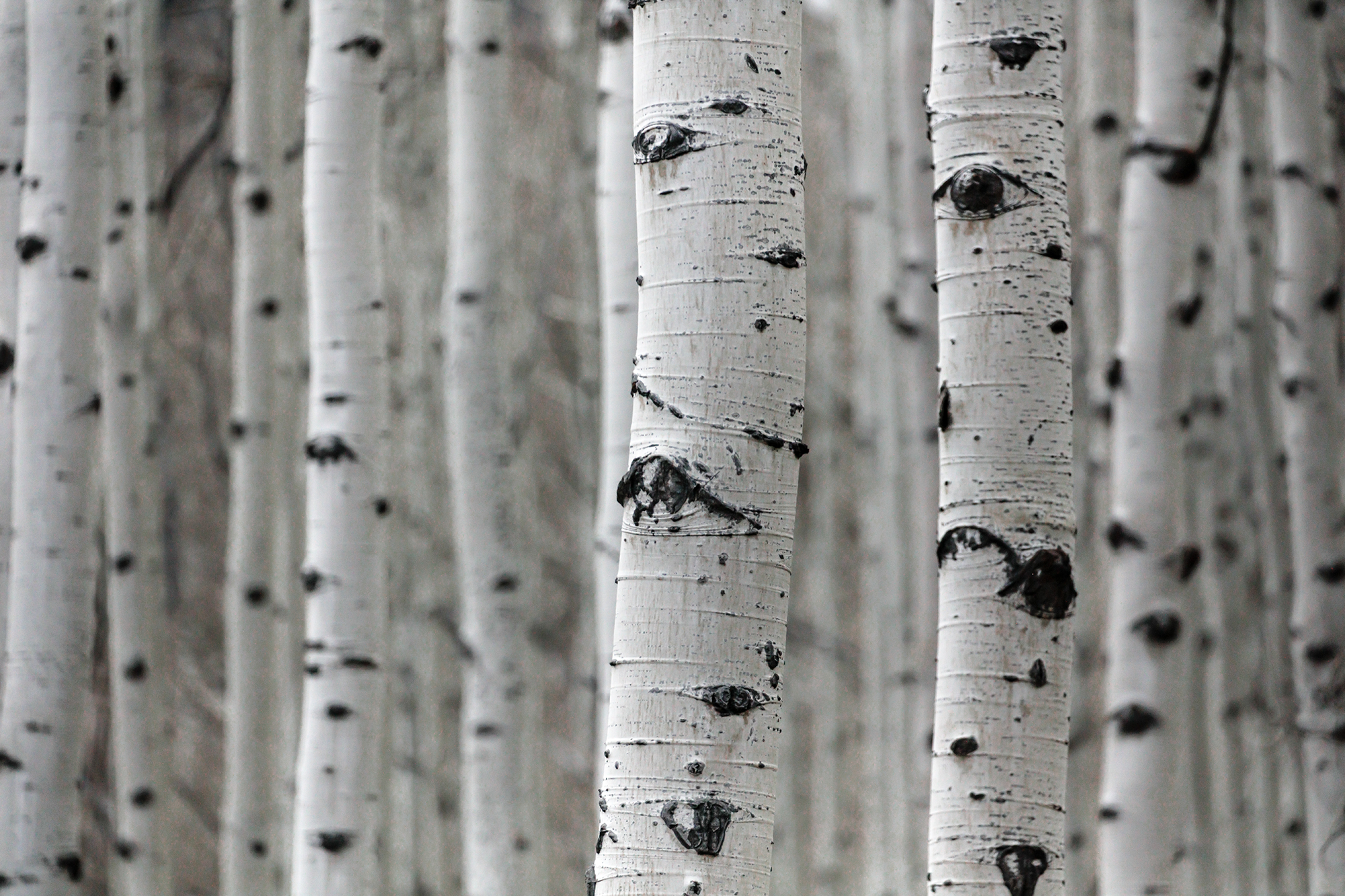
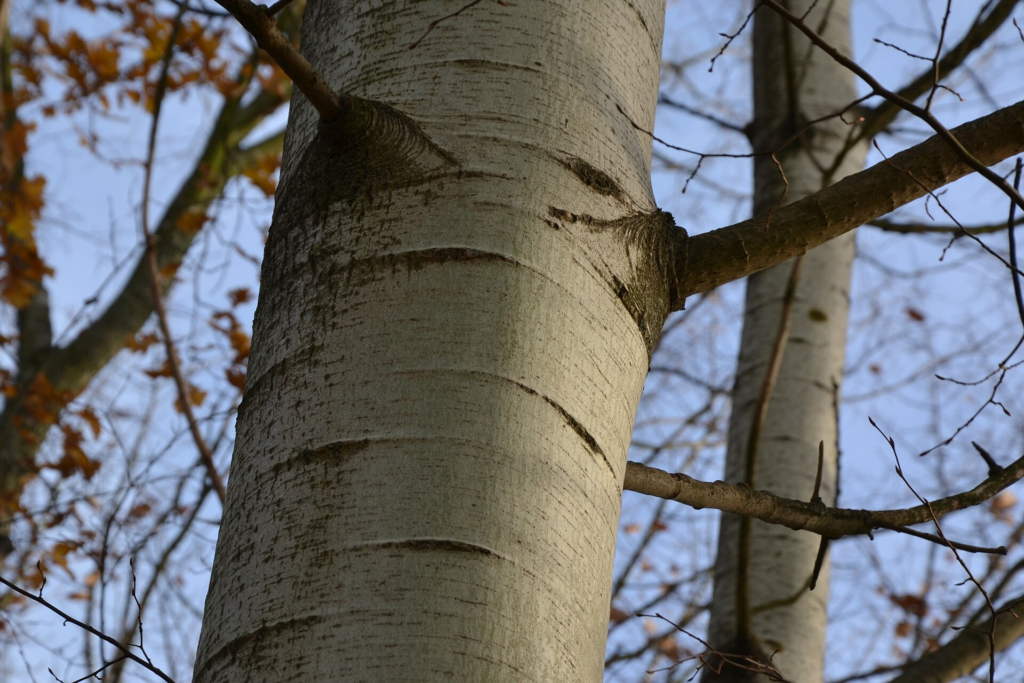
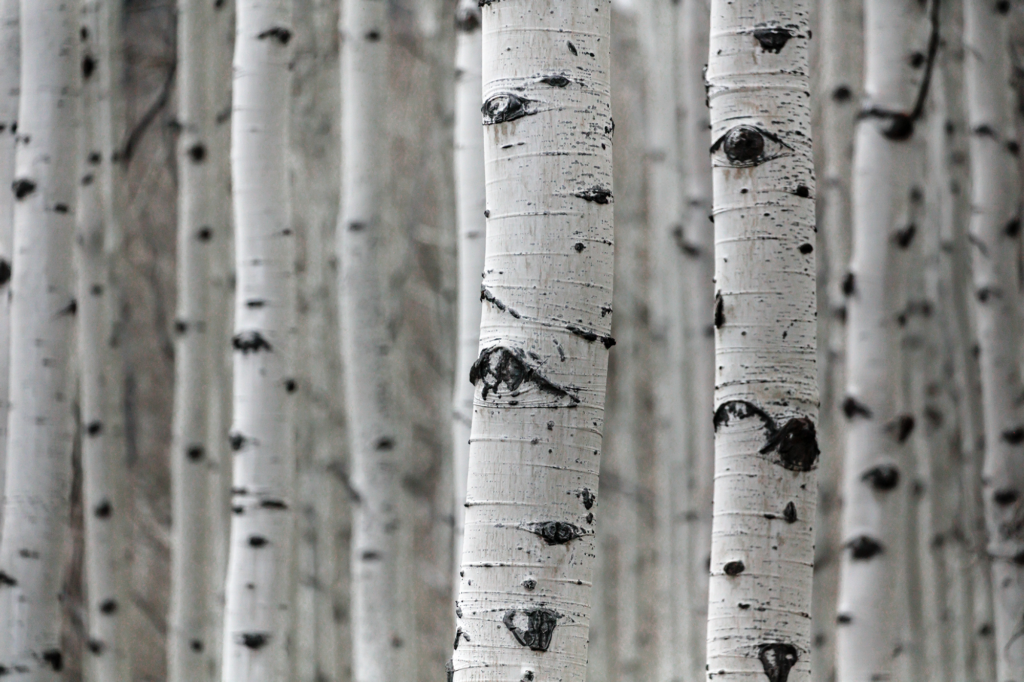
The quaking aspen has a white bark with large black eye like patterns that wrap around it’s trunk. It’s bark is white when young, but as the tree matures it turns a greenish color.
3. Seeds
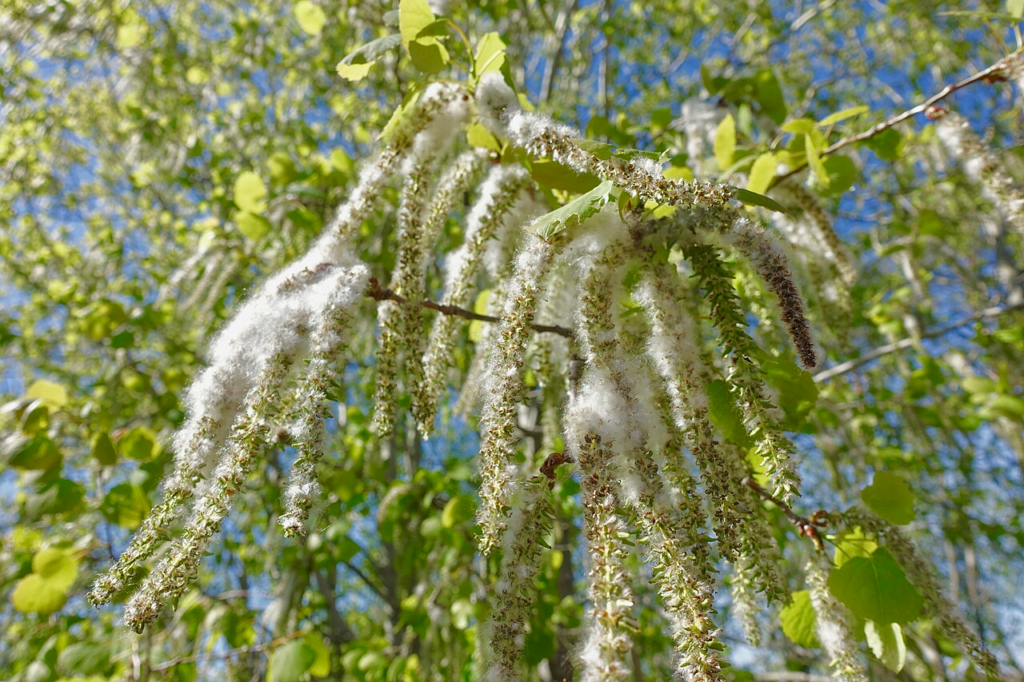
The seeds of the quaking aspen are light and fluffy and are carried along with the wind. Sometimes these seeds can be distributed by water as well. You would think that the quaking aspen tree would spread reproduce itself through seeds, but it’s actually through it’s large root system.
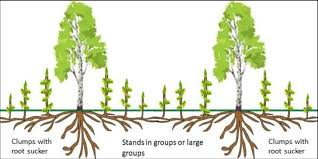
In fact the usual way quaking aspen spreads is by what Arborists call root suckers! Root suckers are root systems that come from one quaking aspen tree. This leads to some interesting results because the trees are essentially a clone of the original. If you want to more about some of the quaking aspen network of roots, check out Pando! The Pando’s quaking aspen spreads is about 106 acres and is considered one of the largest living creatures in the world.
There are some issues with quaking aspens. As they are not usually good for landscaping, as they can be invasive. Changing the ph balance of the soil in and around the tree’s base. Some more of the issues arise from weak wood and they can be susceptible to diseases.
Thanks for taking the time to read! If you’re not sure if that tree in your yard is a quaking aspen, we can help identify it! Give us a call at 231 622 5586!