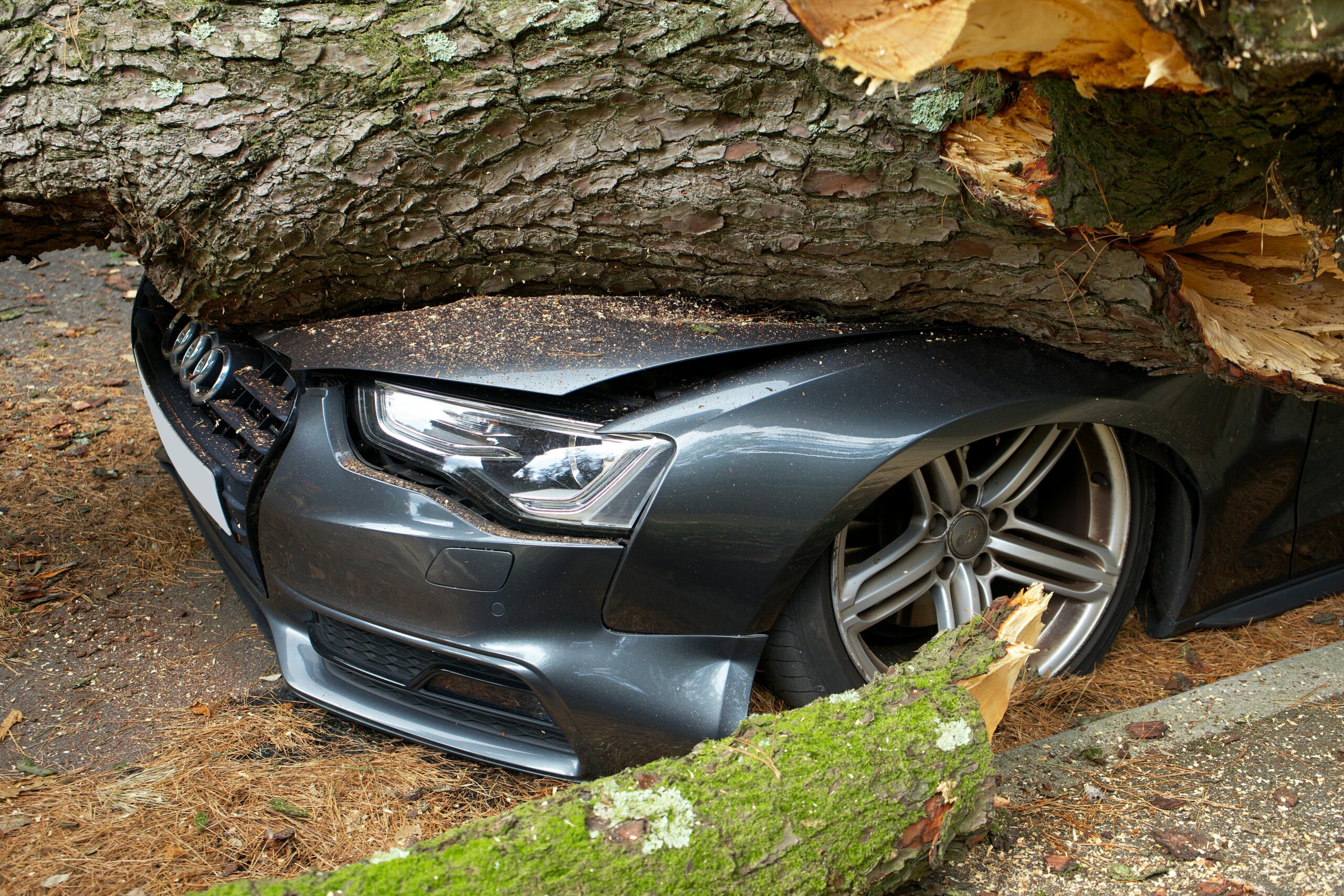

It’s hard to admit, but we all know what that feeling is like: you see a dangerous dark looking cloud above the tree line, thunder growls from all around you and then some time later you hear a loud splitting craaaaaaack~ There’s your enormous beautiful tree hanging detrimentally close to your car, to your power lines, or maybe even to your house.
What do you do in these situations? There really shouldn’t be any waiting when it comes to this, you need emergency tree service.
What determines if you need emergency tree service?
We answer calls whenever you ring, but if you find yourself needing emergency tree service at midnight, giving it a second thought might be worth your while. Here are some ways you can determine if you need it or not.
- Is the tree touching powerlines? If your tree is touching powerlines, never touch or try to handle that yourself. Call a professional.
- Is your stuff okay? If your house has a tree on it, you want to get that taken care of immediately for your family and home.
- Can you leave your home reliably? There’s a tree on your car or, if there’s a tree blocking an important road, that’s your main priority.
- The root ball is lifting: If you see the ground “heaving” or roots pulling out of the soil, the tree is in the process of falling.
Immediate Steps to Take
If you find yourself in the middle of a tree-related crisis, follow this checklist:
- Safety First: Keep children and pets far away from the area. A tree that has already “fallen” can still shift or settle further.
- Call the Power Company: If lines are down, they are the first responders. Do not call a tree service until the utility company has confirmed the power is off.
- Document the Damage: From a safe distance, take photos and videos. You’ll need these for your insurance claim later.
- Call a Professional: Look for an ISA-certified arborist who offers 24/7 emergency response.
Why You Shouldn’t “DIY” Storm Cleanup
It’s tempting to grab a chainsaw and start clearing debris yourself, but storm-damaged trees are incredibly unpredictable.
- Tension and Compression: Fallen trees often have hidden “spring poles”—branches under intense pressure that can snap back with enough force to be fatal.
- Structural Instability: A tree that looks stable might be held up by nothing more than a few splinters of wood.
- Equipment Risks: Operating a chainsaw on uneven, debris-strewn ground or from a ladder is a recipe for a trip to the ER.
Give us a call if you need cleanup after a storm.
How to Prevent the Next Emergency
While you can’t control the weather, you can control your trees’ resilience. Preventative maintenance is the best way to avoid a 3:00 AM emergency call.
- Annual Inspections: Have an arborist check for signs of decay, hollow trunks, or fungal growth.
- Strategic Pruning: Removing deadwood and thinning the “sail” (the canopy) allows wind to blow through the tree rather than pushing against it like a giant umbrella.
- Cabling and Bracing: For trees with structural weaknesses, professional hardware can provide the extra support needed to survive high winds.
Final Thoughts
A fallen tree is a stressful, overwhelming experience. By knowing who to call and acting quickly, you can protect your home and ensure your landscape recovers. Remember: when in doubt, keep out and let the pros handle the heavy lifting.
We’re always open to answering any questions you might have about emergency tree service! Give us a call!