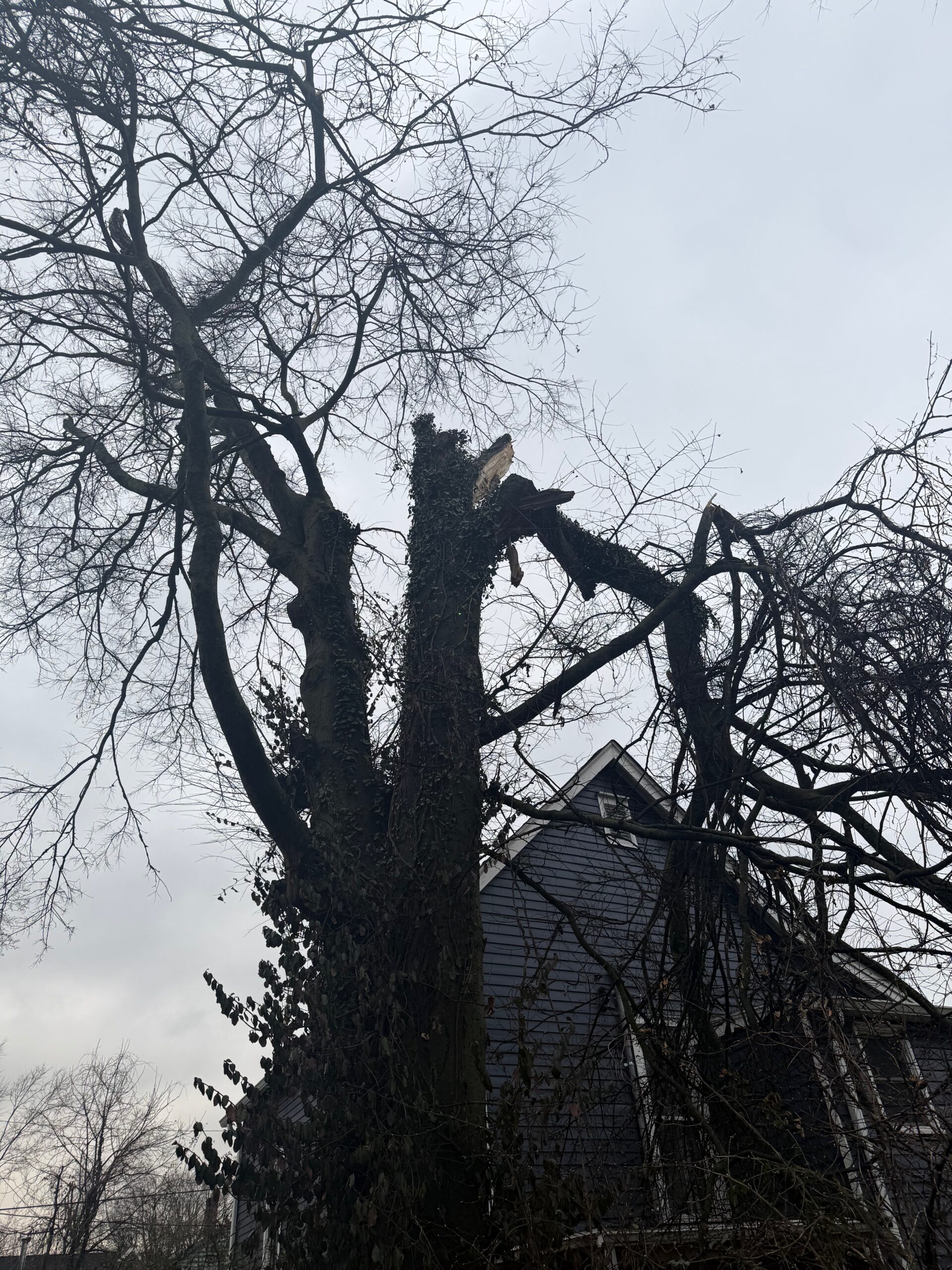

If you’re feeling some stress about a tree falling on your house, there are ways that relieve that stress. Some of the ways are learning how to tell the difference between if the tree is growing naturally, or if it might have some sort of failure that is structural. There are trees that lean a little bit too close, and those leaning trees can be kinda scary especially during some of these awful storms we’re going to be getting in the coming April months. But have no fear, you only really need to worry if you start seeing these three things. When the soil looks like its starting to come up around the base, or perhaps you’ve noticed the tree has a significant new angle to it, or there are some new hollow caves/holes in the trunk of the tree. Read the rest of the post if you’ve noticed these three things to know what to do to get ahead of the problem! Or you could just call us! (:
1. A Lean Doesn’t Always Mean a Fall
If a tree has leaned slowly over years to find sunlight, it has grown “self-correcting” wood to anchor its weight. You only need to panic if the lean happened suddenly or if you see the soil mounding up on the opposite side, which indicates the roots are physically lifting out of the ground.
2. “Wind-Sailing” Is a Simple Fix
You don’t always have to remove a tree to make it safe. Often, a tree acts like a giant sail in the wind, putting pressure on the trunk. A professional thinning or “weight reduction” prune allows the wind to blow through the branches rather than against them, significantly reducing the risk of a snap during a storm.
3. Documentation Protects Your Wallet
Insurance companies distinguish between an “Act of God” and “Negligence.” If a healthy tree falls, you’re usually covered. If a dead, rotting tree falls, they may deny your claim. Having a professional check your trees once a year creates a paper trail that proves you’ve maintained your property, ensuring you aren’t left footing the bill for storm damage.
Bottom Line: If your tree is green and the ground around the base is flat, it’s likely doing its job. If you see “sawdust” at the base or new cracks in the trunk, that’s when it’s time to call in the experts.